
We Already Knew This Would Happen

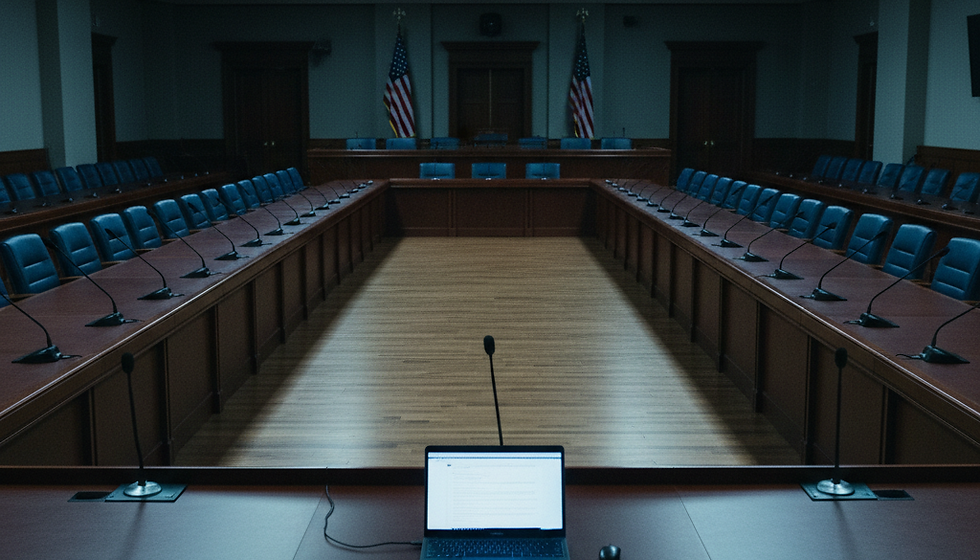

Florida's lawsuit against OpenAI and Sam Altman dropped on June 1st. Eighty-three pages. First state in America to do it. The AG named the CEO personally, held a press conference in West Palm Beach, and said he expects other states to follow. He's right. They will. But here's the thing: none of this should surprise anyone. We have seen this movie. We have seen exactly this movie, with different actors, and we watched it play out over a decade — the internal documents, the suppressed warnings, the executives who knew, the marketing that said "safe" while the evidence said otherwise, and then eventually, inevitably, the courtrooms.
The case against Meta and Google for engineering addictive products that harmed a 20-year-old from childhood — the one a Los Angeles jury found for the plaintiff 10-to-2 — didn't materialize from nowhere. It was built on internal research that Meta possessed, reviewed, and chose not to act on. I wrote about the gate that verdict opened. More than 2,000 individual lawsuits were already assembled before that jury reached its decision. One hundred thousand arbitration demands filed against Meta alone. A separate New Mexico jury ordered Meta to pay $375 million for child sexual exploitation on its platforms. The same week.
Meta's own internal policy document — reviewed by hundreds of people including their chief AI ethicist, before it leaked — explicitly listed it as acceptable for their AI to engage a child in "romantic or sensual" conversation. That was the policy. Written down. Approved. Not an accident.

I covered that story. I covered the one about Meta identifying teenage girls in moments of psychological vulnerability and selling that targeting data to advertisers as a product feature. I covered the internal projection that 10% of Meta's 2024 revenue — roughly $16 billion — would come from ads promoting scams or fraud, and the enforcement policy that allowed high-risk ad accounts to keep running as long as shutting them down would cost more than 0.15% of revenue.
None of that was a mistake. All of it was a decision. Now we're watching the same script load for AI, and the question — the only question that actually matters — is whether we're going to handle it more intelligently this time, or whether we're going to spend the next decade doing what we did with social media: generating enormous harm, documenting it in real time, failing to regulate it coherently, and eventually arriving at the same courtrooms we always end up in, just with bigger numbers.
The Pattern We Keep Running
The social media era produced a specific and repeatable failure mode in tech accountability.
Step one: a new platform achieves mass adoption before anyone fully understands its behavioral mechanics.
Step two: internal research identifies harmful effects — addiction, mental health deterioration, exploitation of vulnerable users, particularly children.
Step three: the research is buried, the product is optimized for engagement anyway, and the marketing continues to describe the platform as a tool for connection and community.
Step four: external pressure — journalists, researchers, whistleblowers — surfaces what the internal documents already showed.
Step five: the company issues a statement using the word "erroneous" a lot.
Step six: Congress holds hearings. CEOs sit at tables. Nothing structurally changes.
Step seven: a decade of harm accumulates while legislators debate jurisdiction and platforms claim they're working on it.
Step eight: the lawsuits finally reach juries who are not confused.
Florida's complaint is somewhere around step four on that timeline, applied to AI. The AG is citing internal documents. He's alleging suppressed warnings. He's alleging that ChatGPT was used in connection with violent crimes and that the platform saw warning signs and didn't intervene. He's naming the CEO personally — which in the social media cycle, nobody did until much later and much more damage had been done.
The early arrival of step four is actually the encouraging part. The question is whether anything that follows breaks the pattern, or just accelerates it toward the same endpoint.
The Regulation Problem
Here's what I'm genuinely worried about, and it isn't OpenAI.
When these conversations enter the political system under pressure — when the headlines are bad, when parents are angry, when attorneys general are holding press conferences — the legislative response has historically been fast, visible, and structurally inadequate.
We got COPPA in 1998. A law that says websites need parental consent for children under 13. A law that an 11-year-old with access to a birthday field can bypass in four seconds. That law has been the primary federal protection for children online for 27 years. It wasn't poorly intentioned. It was poorly designed for the actual threat model, and then nothing replaced it because the window for legislation closed and the platforms had time to build lobbying infrastructure around the gap.
The Kids Online Safety Act — actual legislation designed to impose real obligations on platforms regarding minors — failed. Meta fought hard to kill it. The platforms won.
Arizona charged 20 people over prediction market betting. The Senate banned its own members from the platforms. Neither of those things addresses the structural problem. They're enforcement actions against individuals in a system that has no architecture for prevention.
Knee-jerk regulation doesn't fix the problem. It often protects it — by creating the appearance of action that absorbs political energy without closing the actual gap, and then sitting on the books for a decade as a compliance checkbox while the harm continues underneath it. The question for AI isn't whether Florida sues. It's whether what comes out of these lawsuits produces structural change or produces the appearance of structural change that forecloses real change.
What's Different This Time — And What Isn't
There are things about the AI moment that are genuinely different from social media's early arc. The speed is different. Social media had years to achieve the kind of penetration where harm became undeniable. ChatGPT hit 100 million users in two months. The scale of exposure happened faster than any regulatory cycle could track. The harm is accruing faster than the precedent.
The stakes are different. Addictive social media is destructive. But the Florida complaint isn't describing emotional dependency — it's describing a connection to an FSU mass shooting and alleging that the platform possessed warning signals it didn't act on. That's a different category of harm, and courts and juries respond to it differently.
The competitive dynamic is different. When Facebook was building its addiction architecture, there was no competing company that had structured itself around safety governance as a core differentiator.
Anthropic filed its S-1 the same day as Florida's lawsuit. That company is a Public Benefit Corporation with an independent trust designed to ensure that profit and safety don't collapse into each other when the money gets large enough. Whether that structure holds under the pressure of being a public company is an open question — but it exists. It is a structural answer to the question that Florida's lawsuit is raising.
OpenAI going to market alongside that comparison is not a comfortable position. What isn't different is human nature, institutional incentives, and the basic dynamic that companies optimizing for growth in a low-regulation environment will optimize for growth. That doesn't require malice. It just requires quarterly earnings pressure and a compliance culture that moves slower than a product roadmap. OpenAI is not uniquely evil. Meta is not uniquely evil. They are companies that operated in an environment where the cost of harm was externalized onto users, and the benefit of growth was internalized onto balance sheets. That's not a personality problem. It's a system problem and system problems don't get fixed by naming a CEO in a lawsuit, however historically significant that naming may be.
What Intelligent Regulation Actually Looks Like
I'm going to say something that will probably get me in trouble with people on both ends of this conversation: the goal is not to punish OpenAI. The goal is to build a system where the next version of this doesn't take a decade and a body count to surface. That looks like a few specific things.
Mandatory disclosure of AI content policy. If your system operates at scale — millions of users, including minors — the standards governing its behavior should be public, audited, and enforced. Not a 200-page internal document reviewed by an ethicist and then leaked to Reuters. Public. Auditable. With real liability if what the document says diverges from what the system does.
Age verification with actual architecture. Not a checkbox. Not a birthday field. Real technical infrastructure that prevents children from accessing features the platform itself acknowledges can cause harm. With liability that attaches when the infrastructure is absent — not just when the harm is documented after the fact. Personal liability frameworks for executives. Florida naming Sam Altman personally is significant not because it will necessarily result in a personal judgment, but because it changes the incentive calculus at the leadership level. When CEOs can be named defendants, board conversations about suppressing internal safety research get more complicated. That is a feature, not a bug.
Platform-level disclosure requirements for prediction markets, AI companion features, and any system where user data is being monetized in ways that create conflicts with user safety. The Alpha Raccoon case and the Florida case have the same root: information asymmetry that exists inside a platform being used against the users that platform is supposed to serve. None of these are radical. All of them require political will that survives the lobbying cycle, which is the hard part.
The Bill Compounds

I wrote about Meta documenting its own moral collapse. I wrote about the jury verdict that opened the litigation floodgates on social media. I wrote about the scam ad revenue model that Meta decided was acceptable.
I'm writing this now because the AI version of that cycle has begun, and the window for getting it right — for building the regulatory architecture before a decade of harm accumulates — is open right now, briefly, while the Florida lawsuit is fresh and the political attention is real. That window will close. It always does. The platforms will hire lobbyists. The legislation will get watered down. The compliance checkbox will get built. The harm will continue at slightly lower visibility. Unless the people engaging in this conversation are doing it with the actual architecture in mind, and not just the headline.
Florida filed the first lawsuit. They said it won't be the last.
They're right. What matters is what comes between now and the last one.
Rich Washburn is a technologist and strategist working at the intersection of AI, cybersecurity, and capital. He is Managing Partner and Chief AI Officer at Eliakim Capital, and CIO of Data Power Supply.


Comments