
Apple Got Sued for Failing at AI. Then They Showed Up With This.



So let’s rewind for a second.
Apple’s been selling this “Apple Intelligence” dream for over a year now. They pitched the iPhone 15 Pro as the first true AI iPhone. They teased a smarter Siri. Local LLMs. Seamless on-device intelligence. All the usual marketing sparkle. And then… nothing.
No Siri 2.0. No real Apple Intelligence on-device. And earlier this year? They got sued over it—because customers felt misled. And honestly? That was fair. They pushed the hype, then ghosted the execution.
But now… well, well, well.
Apple finally shows up to the AI party—and they didn’t just bring chips. They brought something fast, lean, and very, very Apple.
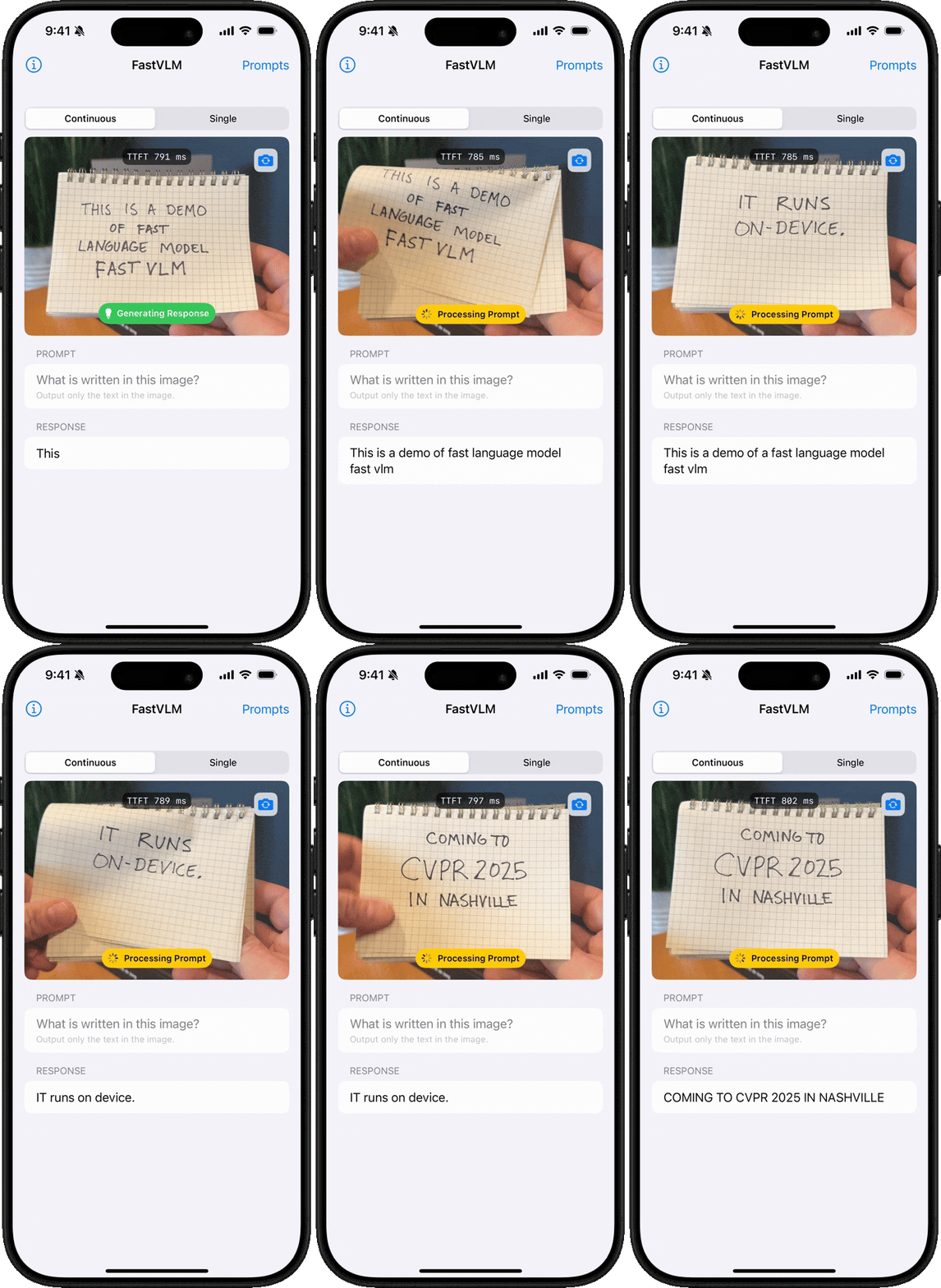
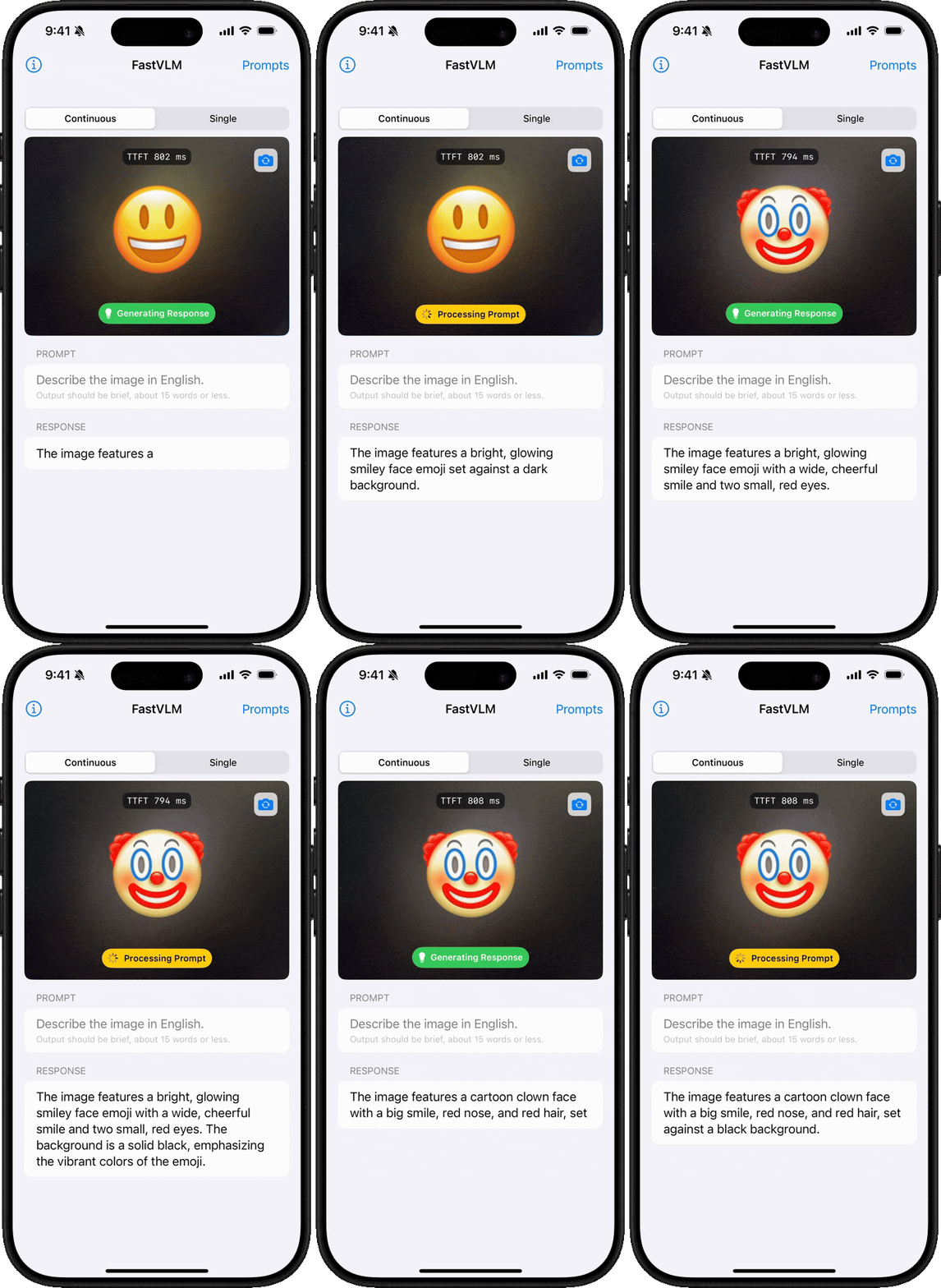
It’s called Fast VLM, and this may be the first real glimpse of Apple’s long-awaited AI vision—and it’s all about visual intelligence.
TL;DR – This Changes the Game (If They Follow Through)
Fast VLM is Apple’s new hybrid vision-language model. And on paper, it’s a beast:
85x faster than leading models at time-to-first-token.
3.4x smaller than similar vision encoders.
Runs locally on consumer devices (yes, even your MacBook Pro).
Beats or matches state-of-the-art performance with a fraction of the tokens.
But here’s the bigger headline: this isn’t just about models and benchmarks.
It’s about Apple finally showing its hand—and staking its AI future on visual understanding.
The Hidden Signal: Apple’s Betting Big on Visual + Spatial Intelligence
If you're wondering where this all leads, here's the bet:
Apple's entire ecosystem is about to be upgraded with real-time visual intelligence.
Not just the camera. Not just the screen.
Everything.
Your iPhone becomes an AI camera + sensor suite: vision, motion, depth, biometrics.
Your Mac becomes an intelligent assistant that sees what you’re working on as you work.
Your iPad becomes a context-aware creative partner.
Your Apple Watch becomes a health-aware, environment-sensitive node in your personal AI network.
And the Vision Pro? That’s the spatial anchor. The interface that blurs digital and physical reality.
This model—Fast VLM—isn’t just a cool research release. It’s a signal. Apple is finally done fumbling around with Siri rewrite projects and endless internal AI drama. They’ve set a direction. And that direction is visual, contextual, and spatial intelligence—running locally, privately, and deeply embedded into everything they make.

Why Fast VLM Actually Feels Different
Apple didn’t just slap some transformer blocks together and call it a day.
They reengineered the model stack from the bottom up.
Hybrid encoder: convolutional layers for speed and local detail + transformer layers for big-picture reasoning.
Token optimization at the architectural level, not as a patch or a workaround.
Fifth-stage downsampling, which cuts latency dramatically without sacrificing accuracy.
Efficiency-first design that runs on actual Apple silicon—not some academic cluster of TPUs.
This isn’t a research toy. This is Apple building AI the Apple way: elegant, efficient, and native to their hardware stack.

This Could Be the Beginning of the Real "Apple Intelligence"
So here’s where I land:
Is this a game-changer? It could be.
Apple is still behind the curve on the narrative. OpenAI, Google, and others have years of head start. The rest of the world has been duct-taping AI tools together and building billion-dollar companies on top of MacGyvered workflows.
But Apple has the one thing no one else has: an ecosystem.
They don’t need a chatbot. They can build an AI layer that sees everything you want it to see—your documents, your screen, your camera feed, your calendar, your health data, your location, your ambient context—and use it to assist you in real time. Not in the cloud.
On your device. Privately. Securely. Fast.
If they can bring Fast VLM to life across iOS, macOS, watchOS, and VisionOS, we’re not just looking at Apple catching up.
We’re looking at Apple doing what they always do: letting everyone else stumble forward, then leaping ahead with something holistic, polished, and wildly useful.
The Bottom Line
Apple’s AI story went from “wait, they’re getting sued for not having AI?” to “okay, this could actually be the real start of something.”
Fast VLM isn’t just Apple finally arriving. It’s Apple showing how they plan to win:
Visual-first
Ecosystem-deep
Privacy-preserving
Hardware-native
Spatial-aware
It’s not about catching up to ChatGPT. It’s about building something completely different—and maybe, just maybe, better integrated into how we actually live and work.
So yeah. I'm watching closely.
Because this time? Apple didn’t show up late. They showed up ready.


Comments